2010
Inductee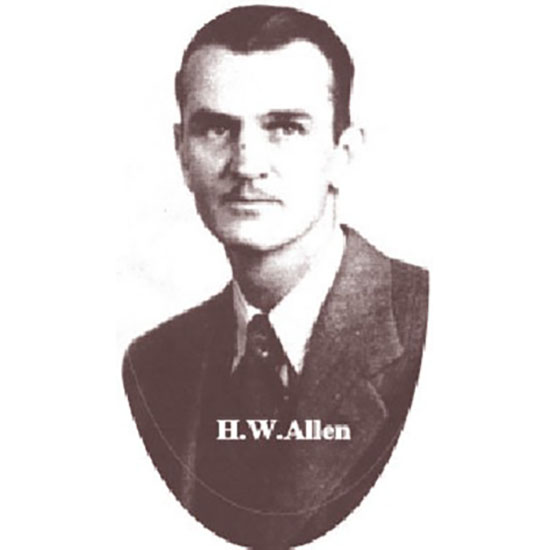
About Holless Wilbur Allen
1909-1979
Innovator, Inventor, Contributor to the Sport...
It is hard to imagine that any other single invention has so impacted a sport like the compound bow has influenced archery. But Holless Wilbur Allen's new bow design did just that - it revolutionized archery and bowhunting. The invention didn't come easy.
Holless Wilbur Allen's Achievements
The mechanical knowledge gained from years of such curiosity was used to build what he could not afford. Income came from a business at home making basket frames of steel wire for the nation's florist industry. All equipment for this was built by him, including a machine that straightened steel wire from a 200-lb. coil and cut it to selected length, automatically. It was built from the parts of two washing machines bought at a junk yard and assorted stuff at home. The commercial equivalent at the time cost $50,000; his out-of-pocket cost was $20.
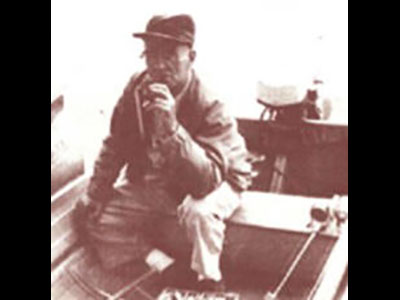
He also loved hunting and fishing. When he learned about paddlefish, he could not afford the necessary deep-sea rod and reel, so he built them, too. Using scrap steel wire and sheet metal, the reel was an open-faced spinning design with the crank aligned parallel with the rod and operating a V-belt drive. Reel drag was adjustable by a built-in tensioning device for the V-belt.
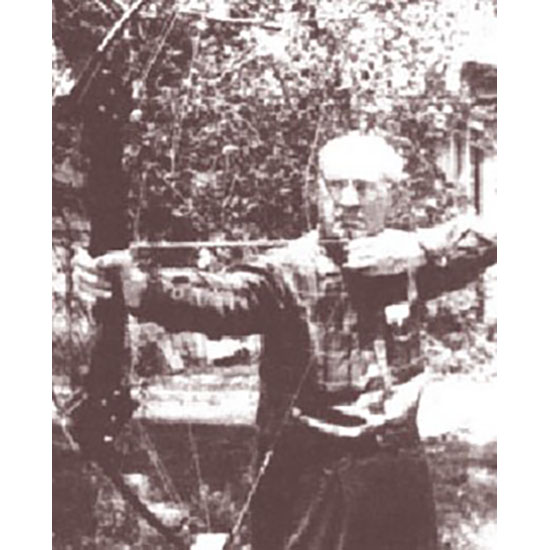
Such was the innovative spirit that drove H.W. Allen to spend hours contemplating a bow that would shoot arrows faster. It really comes as no surprise, then, that lightning would strike one evening in 1966 while he was studying his pulley bow. "What if," he thought, "I positioned the pulley's pivot hole off-center?" That was it! Within two days, Wilbur Allen had built the first compound bow. It was crude - the eccentrics were of wood, the truss handle made of pine boards, limb cores of oak flooring that he laminated with fiberglass roving, all held together with epoxy, nails, a few bolts and a little Elmer's glue. But it worked! He achieved a significant increase in arrow speed over a recurve bow of equal draw weight, relaxation of draw weight of 15%, and the ability to use lighter arrows than the equivalent recurve. His bow design produced impressive performance.
Allen filed for a patent on his new bow on June 23, 1966. It was granted in 1969. By 1977, there were 100 different models of compound bows available, only 50 recurve models. After only ten years of production, two thirds of the available choices were compounds.
Holless Wilbur Allen had laboriously contrived a rather complicated device that performed a relatively simple task - shoot an arrow fast. He fought hard to get approval from state game agencies for its use in bowhunting and succeeded. Likewise, competitive archery organizations finally approved the compound for tournament shooting.
The rest is history.
Notes of Interest
• Recognized as “The Father of the Compound Bow”
• Sought Ways During the Early 1960s to Achieve Faster Arrow Speed for Deer Hunting
• Experimented with Modified Recurve Bows Fitted with Pulleys To Achieve a Block & Tackle Effect
• Perfected His Invention in 1965 and Began Limited Production in 1967 after Bow Manufacturers Expressed No Interest in the New Design
• The Compound Bow Eventually Revolutionized Modern Archery